

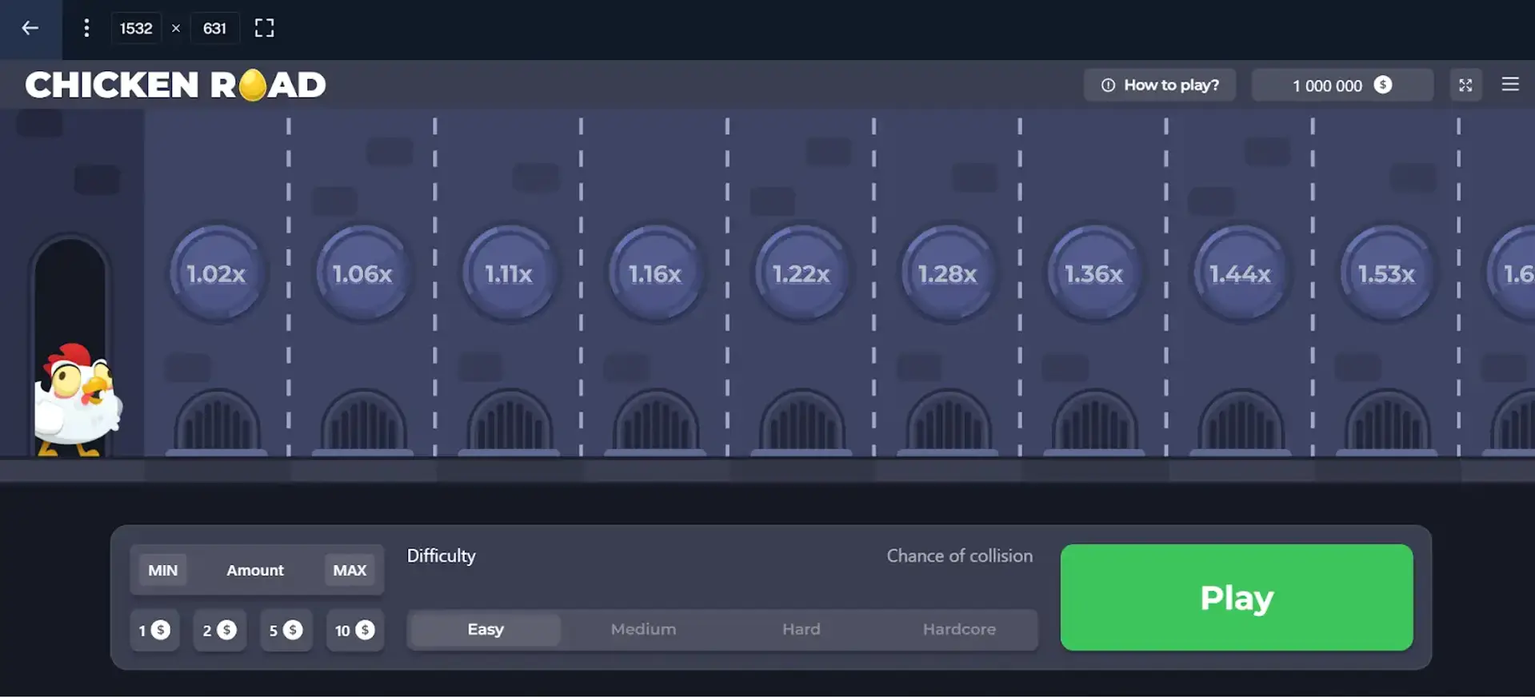





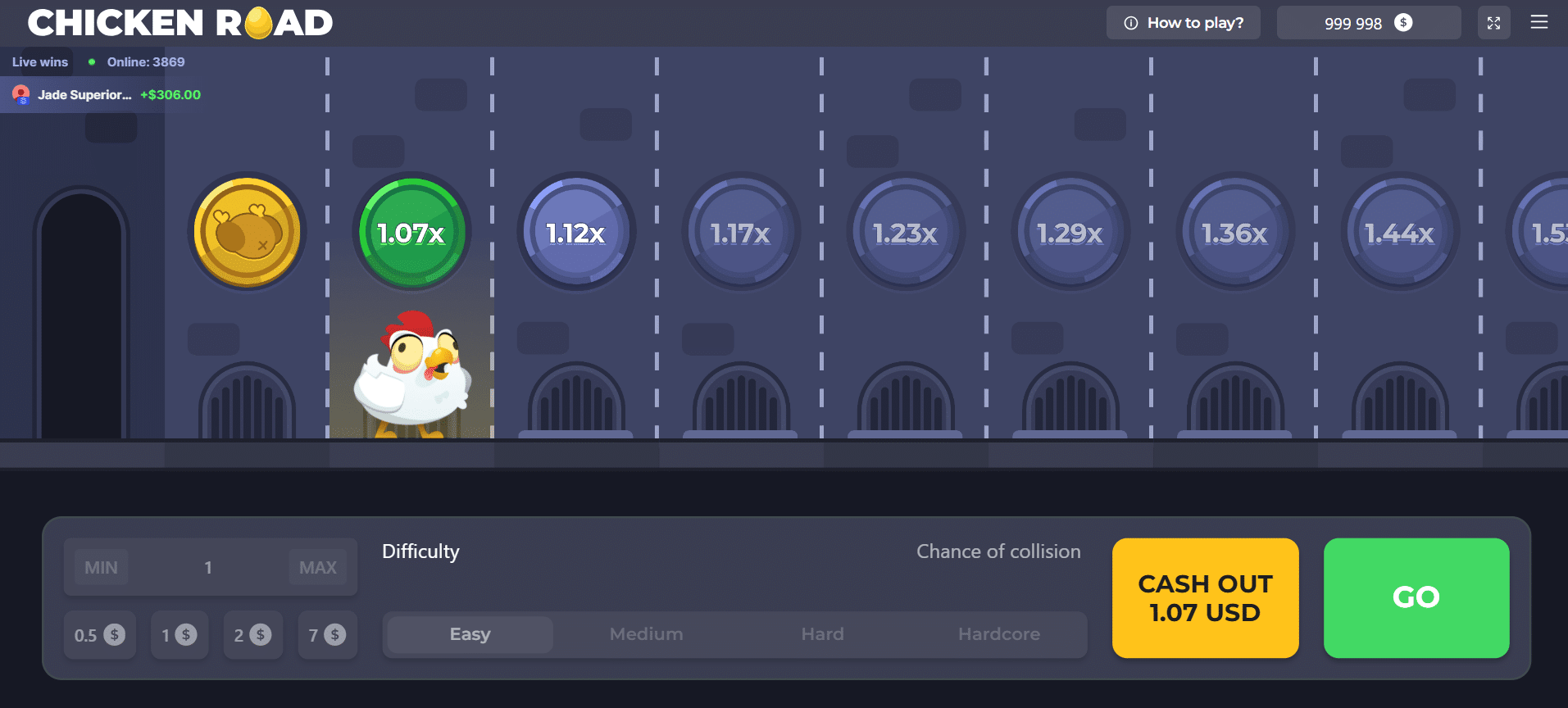
Chicken Road Demo In France
Test the game in demo mode, understand the rules and play in France in 2026 with a clear budget, time and limits.
Understand Chicken Road Demo Before Playing
Before clicking everywhere, set the scene: you are here to test a game, not to “catch up” on anything. The trial mode is for spotting the rhythm, controls, triggers, and your own reaction. It's a useful step, especially if you're playing from France and want to maintain responsible practice, reserved for adults, in compliance with applicable rules.
Imagine the scene: you launch a few rounds “just to see” and, after three minutes, you speed up because it seems slow to you. This is typical. Generally, players get more information when they slow down instead of compensating: a few clear actions, then a pause to observe what is really happening on the screen.
What matters is not the luck of the moment, but the reading of the game's behavior: frequency of small occurrences, feeling of volatility, and clarity of steps. The demo promises nothing, it gives you a basis to decide if you like this format and how you want to manage your session.
Why the Demo Helps Set Limits
The best use of free mode is to force you to define a simple plan: duration, rhythm, and stopping point. Without this anchor, you risk going from “test” to “autopilot” without even realizing it.
Imagine you're playing on mobile while commuting. You receive a message, you reply, then you restart “just a little bit”. Often, that's when the session turns into a habit. A visible time limit (even an external timer) brings you back to a conscious decision.
Set a minimal framework: a short block to learn the controls, then a second block to test the fluidity. If you feel like speeding up or increasing “to feel something”, take that as a signal to pause, not as an order to insist.
What You Check Without Risking Your Budget
In trial mode, you can check very concrete things: understanding the rules, readability of symbols, animation speed, menu ergonomics, and message consistency. You also test your comfort: does the interface make you want to click too quickly? Do you understand where to adjust the bet, speed, or stop?
Imagine you start a short series and don't understand why an event is triggered. Rather than forcing it, go back to the rules and look for the precise cause (often a symbol or a threshold). The good habit is to learn one element at a time, then calmly resume the session.
You can also simulate your future routine: “I play for 10 minutes, I stop, I come back if I feel like it.” If this pattern seems natural to you, that's a good sign. If it seems impossible, it might be the game – or your moment – that isn't suitable.
All promotional incentive structure is clearly stated in writing and/or via electronic means in an easily understood manner. All codes are accompanied by an explanation of what the code is for, who is eligible to use the code, and how it should be used. As such, players are less likely to be confused about what is required of them in order to receive a reward and how the reward will be applied after receiving it. The promotional incentives provided to participants provide them with time to become familiar with the gaming system's mechanics, their interface, and progress, before deciding how deeply they wish to become involved with this platform. Therefore, players are encouraged to participate in an informed manner, rather than being pressured or tempted to act quickly.
Setting Up a Mobile Trial Session
On mobile, the real challenge isn't the game, it's the environment: notifications, multitasking, unstable network, low battery. A successful trial session is one where you control the context. Two minutes of preparation can save you twenty minutes of frustration.
Imagine you launch Chicken Road on a phone with 9% battery, with power-saving mode enabled. The game freezes, you press several times, then you lose track. Generally, the best tests are done under good conditions: charged phone, stable connection, and no other apps monopolizing the screen.
Start small: a series of manual turns, reasonable speed, and regular checking of your attention. If you catch yourself playing without looking, the pace is too fast for a useful test.
Simple Settings to Avoid Autopilot
Disable what pushes you to chain without thinking: maximum speed, prolonged automatic actions, overly insistent alerts. Keep what helps you: a time reminder, a planned break, and easy access to the settings menu.
Imagine you activate an automatic option “just to see” and start scrolling elsewhere. That's when you lose feedback: you no longer know which setting suits you. The practical rule: you are testing, so you stay present. Automatic only in small blocks, with a clear stop.
If you are playing from France, also keep in mind the responsible dimension: controlling time and budget is part of the experience. A successful trial session is one that ends when you decide, not when you are tired.
Game Rhythm, Mechanics, and Event Reading
Free mode helps understand the rhythm without pressure. Watch how the game “breathes”: are there many minor actions, or long empty sequences? Do the highlights come quickly, or do they require patience? It's not a question of right or wrong, it's a question of suitability for your style.
Imagine you're looking for a game for a 10-minute break. If the pace is slow, you risk getting frustrated and speeding up. Conversely, if the pace is very nervous, you risk losing your sense of time. Generally, the right balance is found when you can stay on a stable bet without tension.
To read events, do a two-step test. First, 20 slow actions looking only at the interface: buttons, menus, displayed rules. Then, 20 actions observing a single point: what triggers special phases, or what changes the dynamic. This method avoids “hot” conclusions.
Keep a golden rule: don't try to prove anything. A test is not a performance. If you feel the urge to “force your luck”, it's the ideal time to close the application, breathe, and then come back later if you wish.
Finally, think about consistency: if you plan to play for real one day, already practice the essentials: limited time, breaks, and a clear end to the session. The game remains an entertainment reserved for adults; your best protection is your routine.
Payments, Withdrawals, and History in Real Conditions
Even if you're testing for free, it's useful to understand the “real” journey: where the payment options are, how to view your history, and what account management looks like. The idea isn't to invent delays or guarantees. The idea is to know where to click and what to prepare, to avoid panic on the day you make a transaction.
Imagine you finish a session and you want to "just withdraw quickly" without looking at your profile. Often, friction comes from unfinished details: missing information, requested documents, or an incompatible payment method. In general, everything becomes simpler when you prepare your account beforehand, not afterward.
A healthy approach: separate play from administration. First, you play (or test). Then, you manage the account (payment, withdrawal, verification) in a calm moment. Mixing the two invites impulsivity.
Choosing A Payment Method Without Getting Distracted
Choose a primary method and stick to it. The goal is not to find "the fastest," but the clearest for you: the one that helps you track your expenses and stay consistent. Constantly changing methods often adds steps, rather than removing them.
Imagine you alternate between card, wallet, and another option depending on your mood. Then one day, you can't remember what you used. Most players reduce this risk by adopting a simple scheme: one primary method, one backup method, and no improvisation during the session.
The other concrete point: do not perform financial transactions on an unstable network. On mobile, wait for a proper connection, then confirm only once. If the screen is slow, the right reflex is to wait and check the history, not to repeat.
Withdrawal: Prepare Your Profile Before Cashing Out
Withdrawals go more smoothly when your profile is clean. This means: consistent information, email access, and documents ready if requested. No need for promises on deadlines. What matters is your ability to follow a process without complicating it.
Imagine you make a request, then get annoyed and follow up twice "to speed things up." Often, it does the opposite: you create duplicates and no longer know which status to track. The simple rule: one request, one follow-up, one support channel if necessary.
To stay calm, note your benchmarks: date, method, amount. It's basic, but it transforms a "I think that..." into "here's exactly." And when you need to talk to support, precision saves time.
Point To Check | Why It's Useful | Quick Tip |
Complete Profile | avoids surprise steps | complete info before any operation |
Primary Method | simplifies tracking | keep the same method for a period |
Transaction History | clarifies what has been done | check after each session |
Document Quality | reduces back and forth | clear photo, natural light |
Limit Reminders | protects your routine | visible time + budget during the session |
History Tracking and Personal Organization
The history is your safety net. Consult it regularly, especially if you play from multiple devices. A test can help you locate where this information is and how it is presented.
Imagine you come back a week later and try to reconstruct what you did. It's blurry, and you waste time. Most players adopt a mini-routine: after each session, a quick look at the history, then close. This avoids surprises and endless discussions.
Also maintain simple hygiene: do not save your access details on a shared device, activate a screen lock, and log out of your session. This is the basis of responsible use and is reserved for adults.
Support, Security And Responsible Gaming In France
Security is not a speech, it's a series of concrete choices. Unique password, locked device, and clear session end. Add to that a simple rule about your mood: if you play to "recover," you stop. Pause and restriction tools exist to help you stay within a healthy framework.
Imagine a stressful day: you start the game to distract yourself, then you feel the tension rising. This is precisely when control is worth more than a "good session." Generally, a two-minute break changes the next decision, and a longer break protects if the pattern repeats.
In France, keep the framework: entertainment, applicable rules, use reserved for adults. Everything else - bonuses, speed, excitement - comes after. A player who knows how to stop plays better, even when not winning.
Contact Support With The Right Details
To get a useful answer, write like a technician, not like a hurried customer. Describe the problem, the time, the device, and what you have already tried. One main request per message. You will save time and avoid unnecessary exchanges.
Imagine you send "it's not working" and expect a solution. Often, you'll receive one more question, then another, and the thread gets longer. Conversely, a short, structured message provides clearer feedback: "access," "payment," "verification," "display." You channel the conversation.
Also keep one rule: don't change three settings at once. If you change the network, password, and device all at once, you won't know what worked. One test = one variable at a time.
Pause And Self-Exclusion: When To Stop
The right time to stop is before the emotional tipping point. If you find yourself speeding up, increasing the stake "to feel it," or wanting to erase a losing streak, you're already at the limit. At this stage, pausing is a smart move, not an admission.
Imagine you say "just one more" five times in a row. That's a signal, not a strategy. Most players who maintain control apply a simple rule: when the phrase repeats, you close. And if this pattern recurs often, you use a long break or temporary exclusion to protect yourself.
Most importantly: make the end of the session concrete. Close the app, put down the phone, do something else for a few minutes. This breaks the automatic behavior and puts the game back in its place.
Player Reviews: How To Read Between The Lines
Online reviews often say more about player behavior than about the platform itself. Many negative comments come from the same scenario: urgent deposits, lack of limits, changing methods, and impatience during verifications. Reading "between the lines" means spotting these patterns and deciding how you will avoid them.
Imagine you read a message: "everything is slow." Then you discover that the person changed their data in the middle of a request, or sent several requests in a row. This is common. Generally, a process becomes smoother when it is consistent: one method, one request, one follow-up, and clear communication.
Positive reviews, however, can also be misleading if they don't describe anything. "Great" doesn't tell you much. What helps is precise feedback: "this is how I set my limits," "this is how I regained access," "this is how I avoided playing too long." Take these elements, adapt them to your routine, and you will have a more stable experience.
FAQ
How to test the game in free mode without losing control?
First, set a duration and a theoretical budget, even for a trial, then play in short blocks with breaks. Imagine you start "just to see" and speed up because it's slow: that's often when the test becomes automatic. Stick to manual actions at first, observe one point at a time (controls, rhythm, triggers), and close the session as soon as you feel the urge to insist. The goal is to learn, not to prove anything, in a practice reserved for adults.
What checks should be done before switching to real money?
Check the clarity of the rules, access to limits, transaction history, and support options. Imagine you win one day and want to withdraw quickly, but your profile is incomplete: frustration comes from there, not from the game. Complete your information calmly, choose a primary payment method, and ensure you have access to your email. If something is unclear, postpone the decision rather than compensating with speed.
How to avoid playing too fast on mobile?
Cut out distractions: unnecessary notifications, multitasking, unstable network. Imagine you activate an automatic option and respond to messages: you lose perception of time and rhythm. Prefer short series, a visible timer, and regular checks of your attention. If you find yourself clicking without looking, slow down or stop immediately, then resume another day under better conditions.
What to do if a payment operation seems blocked?
Do not repeat the action in a panic. Imagine a screen that loads slowly: many people confirm twice and get lost. Wait, check the history, check your connection, then only make one new attempt if necessary. If you need to contact support, give a short and precise message: approximate time, method used, and exact step where it stops.
How to prepare a withdrawal request to avoid back and forth?
Prepare the profile in advance: consistent information, email access, clear documents if requested. Imagine you send a blurry photo and they ask for it again: this is the classic source of delays. Make a single request, follow its status without duplicating, and keep a simple note (date, method, amount) to communicate effectively. Calm and order accelerate more than insistence.
When should you use a long break or temporary exclusion?
When the game goes from entertainment to impulse. Imagine hearing yourself say "just one more" multiple times, or wanting to increase the stakes to clear a series: that's a clear signal. A short break may be enough if it's occasional, but if the pattern returns, a long break or temporary exclusion protects your budget and your mood. The goal is to remain in adult-only use, with decisions made calmly.
How to read online reviews without falling into the trap of tone?
Look for details, not emotions. Imagine a very negative comment without context: it could come from impatience, an incomplete profile, or repeated actions. Useful feedback describes a precise step, an action, then a consequence. Create your own grid: clarity, support, account management, limits, and routine. This way, you transform reviews into practical advice instead of enduring them as absolute truth.